

Beatriz Milhazes: Layering Pattern, Color, and Energy

Rio-based artist Beatriz Milhazes (b. 1960) creates vibrant, large-scale paintings bursting with brightly colored rhythmic stripes, decorative motifs, abstract shapes, botanical elements, and detailed patterns. Her compositions are dynamic and exuberant, evoking the energy of a Brazilian carnival. This sense of movement is heightened by the absence of a clear focal point, compelling the viewer’s eye to continuously roam the canvas and actively engage with the work.
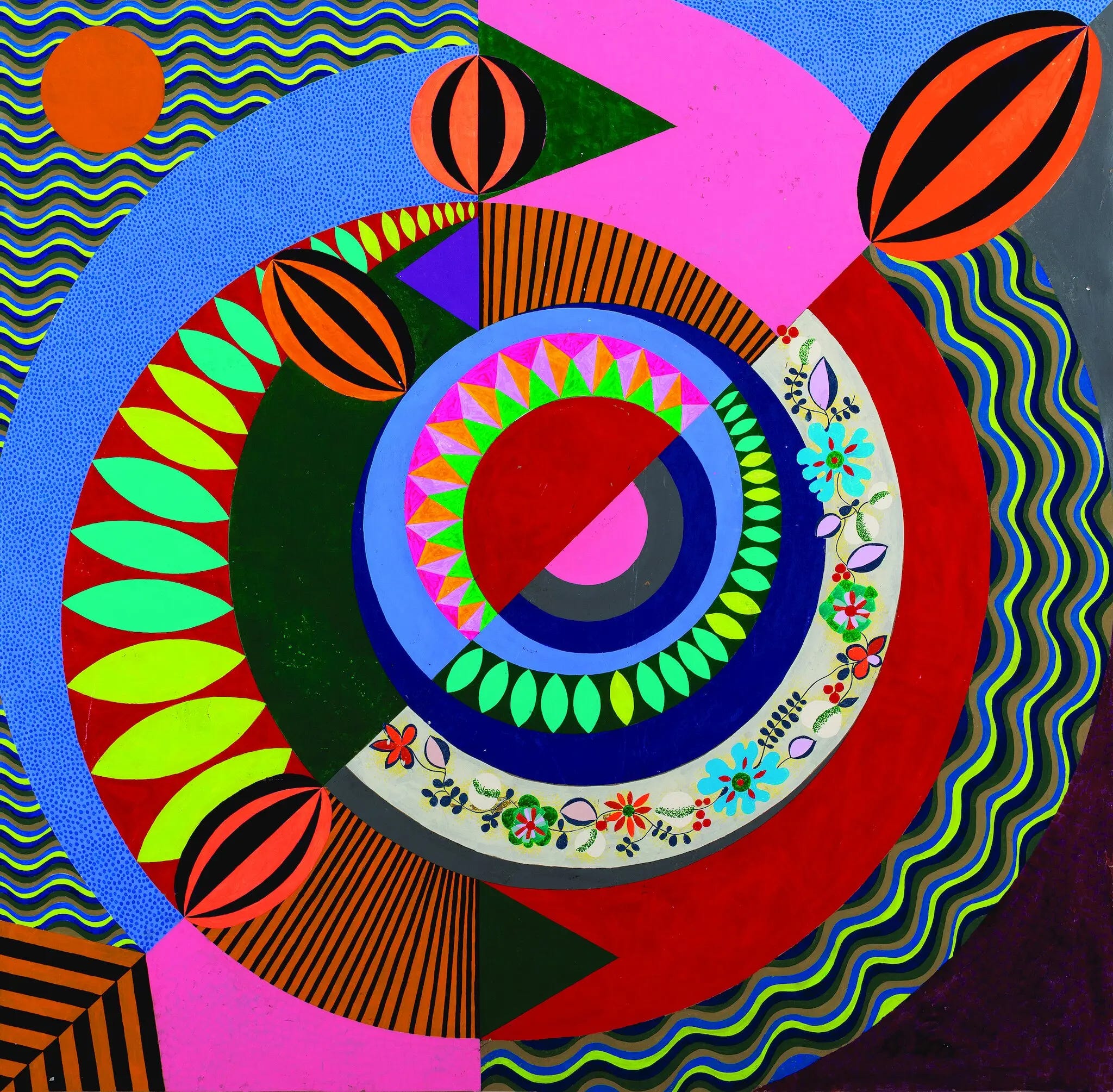
Milhazes’s Brazilian culture and environment deeply inform her art. She draws inspiration from the lush flora of the Rio de Janeiro Botanical Garden, located next to her studio, as well as the Tijuca Forest. Waves of color echo the ocean and the iconic Copacabana Beach promenade, which features an Op Art-inspired mosaic designed by Roberto Burle Marx in 1970. Her motifs include arabesques, roses, and doily patterns, referencing Brazilian Baroque, colonial, and folk art traditions. (The New York Times, 10/26/08)
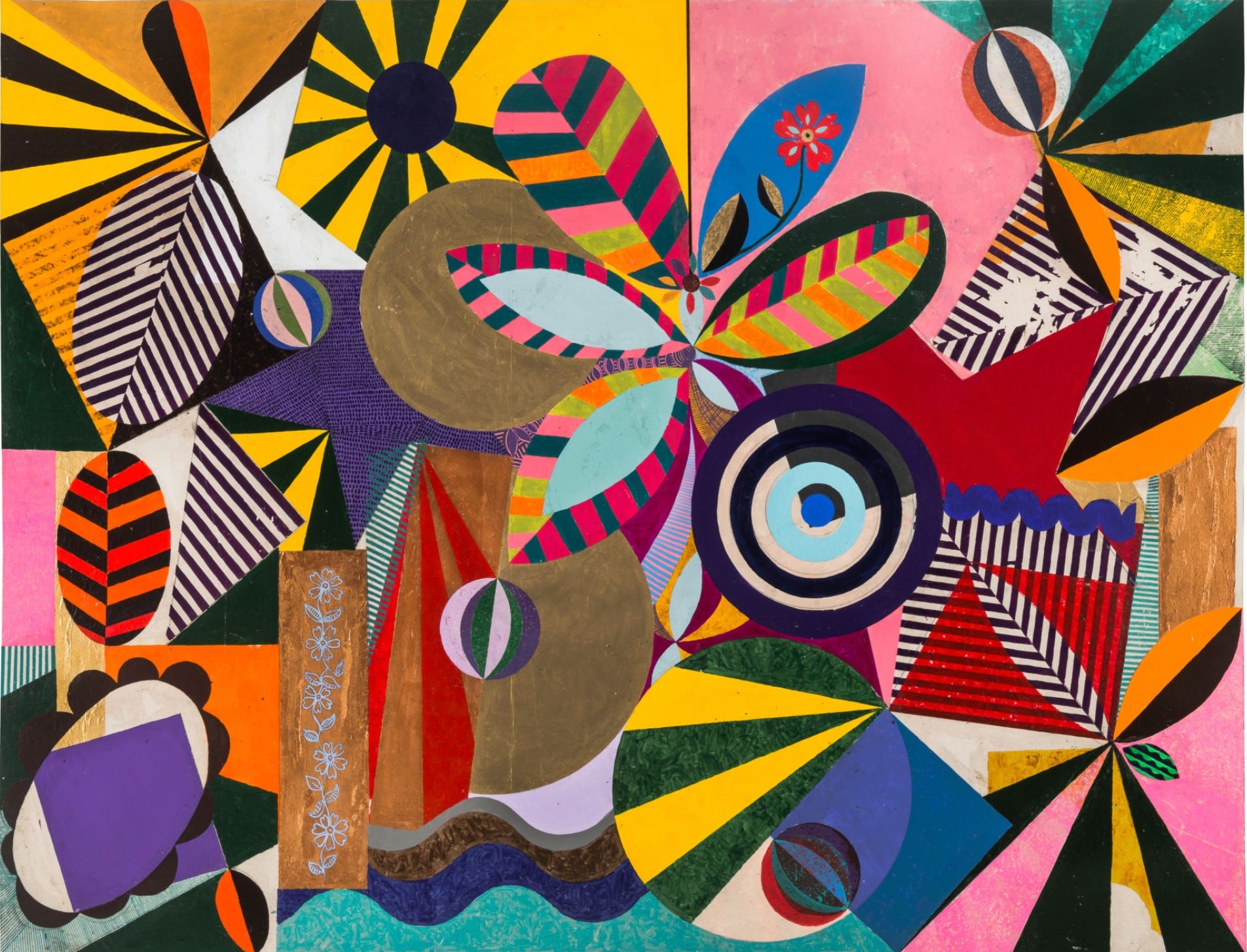
Milhazes applies paint to canvas using a technique she calls “monotransfer.” She first paints shapes and motifs onto plastic sheets. Once dry, she glues the sheets, paint side down, onto the canvas and then peels off the plastic, leaving a mostly smooth surface without visible brushstrokes. This method allows her to construct a painting as one would a collage—carefully arranging elements before committing them to the canvas. The process results in a slightly worn, weathered quality, contrasting with the sharp, graphic nature of her shapes. She builds layers of motifs while maintaining a hard-edged, structured aesthetic.
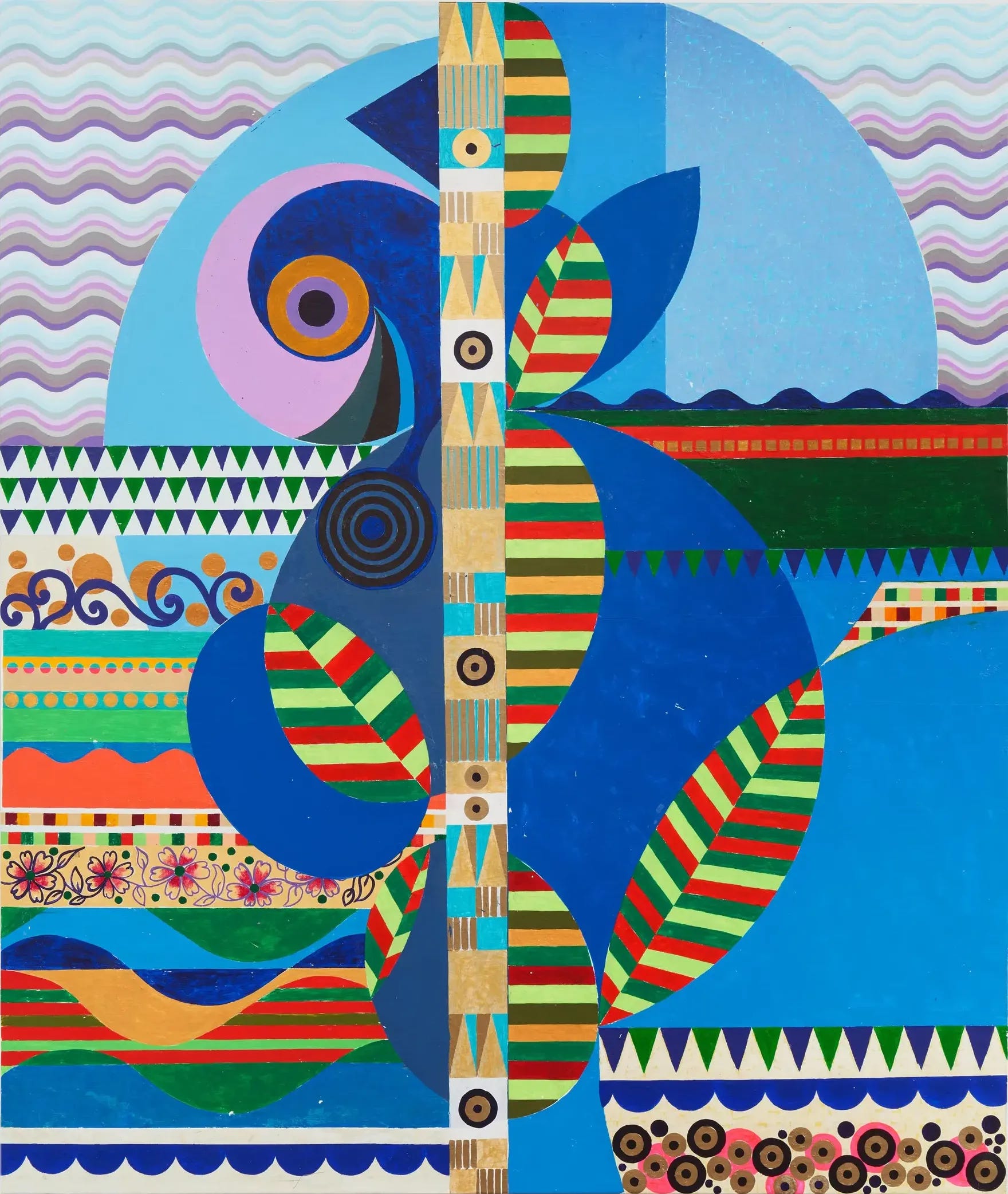
While Milhazes incorporates actual patterns into her work, she also repeats and layers motifs—floral elements, arabesques, and geometric forms—in a way that mimics patterning without strict uniformity. This interplay between structured repetition and free-flowing composition gives her work both a rhythmic and dynamic quality.
Despite the apparent exuberance of her paintings, Milhazes describes using mathematical precision to create them. “I’m a very rational person,” she told The New York Times. “I develop a kind of a system. I need the structure very rigid.” (The New York Times, 09/16/22) Speaking with PACE Gallery, she elaborated on her process: “Geometry gives structure to my sensibility. It turns into diagonals, patterns, textures, motifs, and forms.” (PACE Gallery,09/16/22)
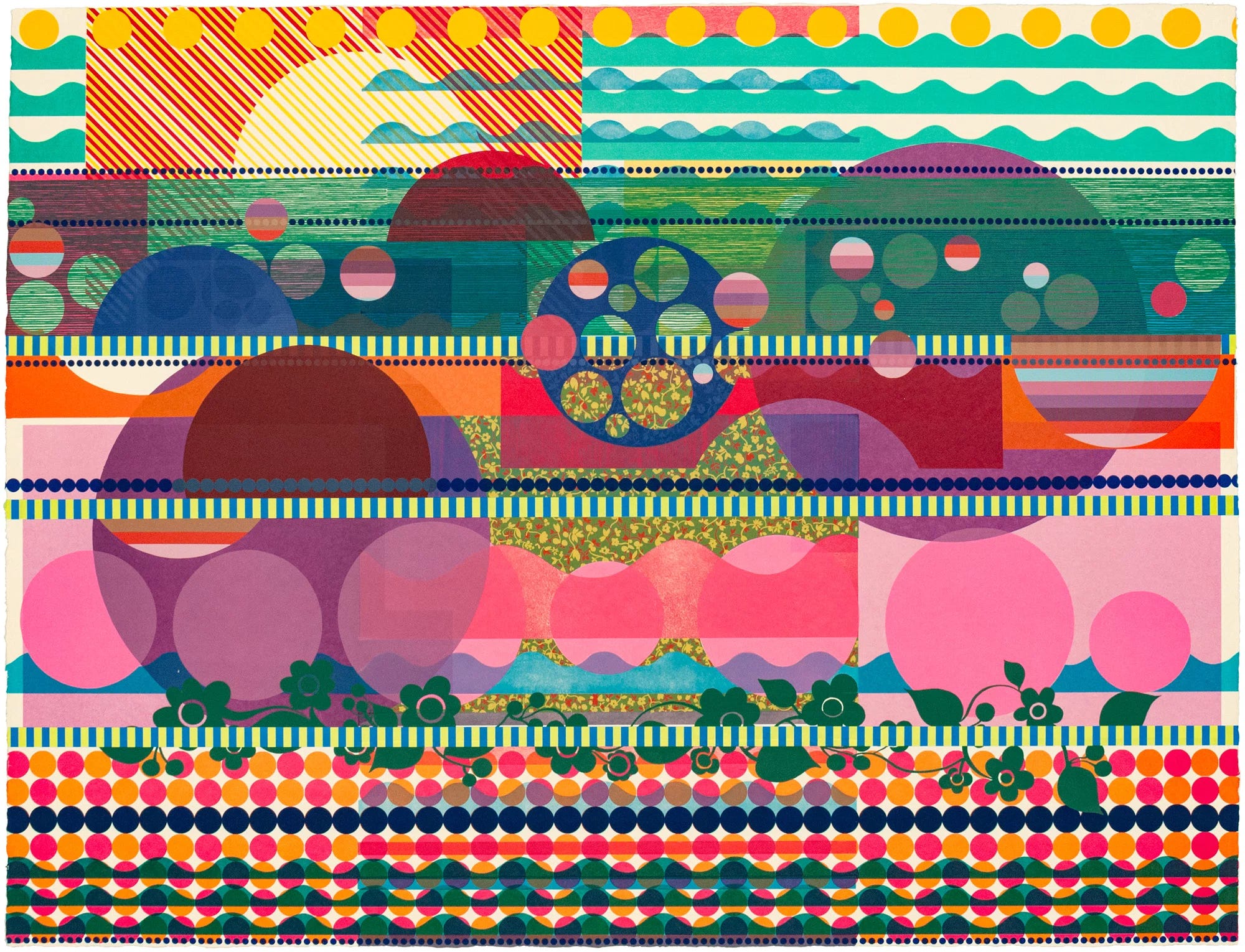
Milhazes considers herself a “color observer, a color researcher.” She juxtaposes intense colors to heighten contrast and uses color to create balance, harmony, and structure. (Victoria and Albert Museum Blog, 04/18/24) Milhazes further explains:
…the use of colour is a characteristic that unites my work, which is funny because when I first started out all I wanted to use was white. Now, colour is a way for me to create contrast, drama and mystery. (Apollo Magazine, 04/24/18)
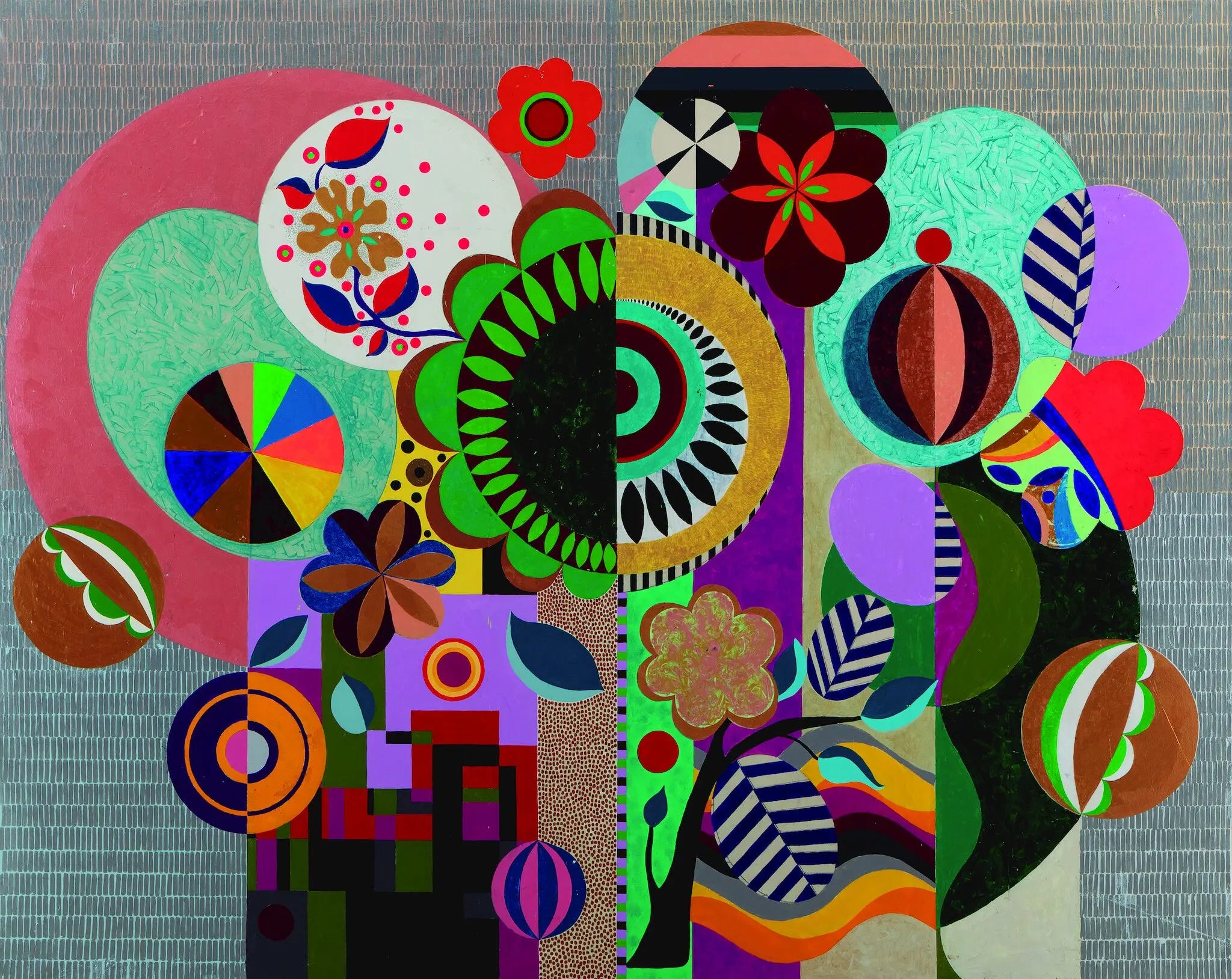
She cites fellow Brazilian artist Tarsila do Amaral, along with Henri Matisse and Piet Mondrian, as major influences. Hints of Hilma af Klint and Roberto Burle Marx can also be seen in her work.
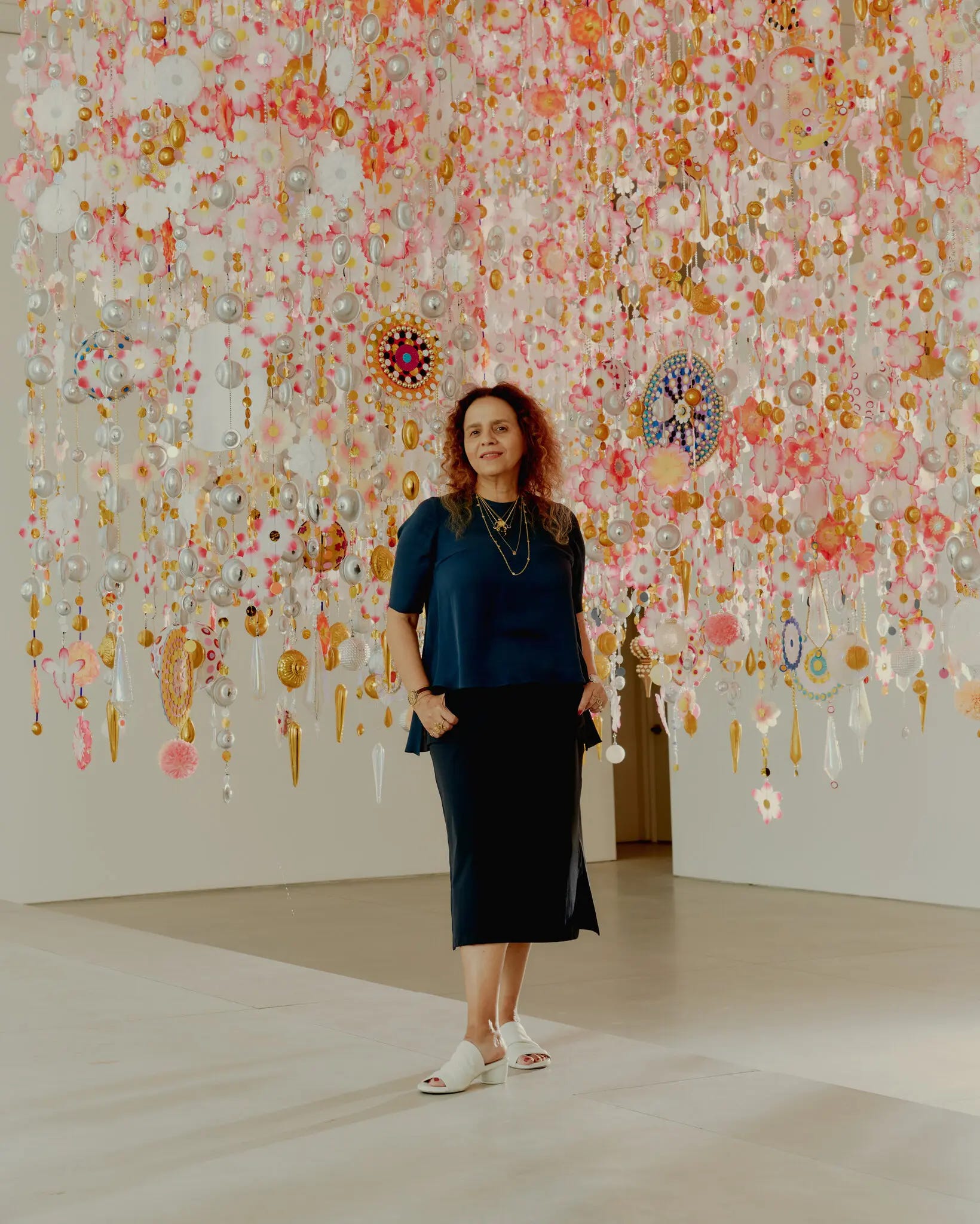
Milhazes’s paintings balance order and chaos, layering rhythmic motifs and interwoven forms to create a sense of movement and energy. Madeleine Grynsztejn, director of the Museum of Contemporary Art in Chicago, describes her work as a fusion of decoration, craft, and formal abstraction. (New York Times, 10/26/08) Through her monotransfer process, Milhazes has developed a distinctive visual language that references high art, decorative traditions, and organic forms found in nature. Her kaleidoscopic compositions brim with allusions to her home, Rio de Janeiro.
If you're in New York, you can see her work in person at the Guggenheim’s exhibition Beatriz Milhazes: Rigor and Beauty.
Sources
“Beatriz Milhazes Mistura Sagrada,” exhibition, PACE Gallery, 09/16/22
“Collection in Focus| Beatriz Milhazes: Rigor and Beauty,” exhibition, Guggenheim New York, 03/07/25
“Conceptual Carnivalesque,” Tate Etc, 07/10/24
“Every Work I Create is a Mathematical Dream,” Apollo Magazine, 04/24/18
Kino, Carol, “Modern Motifs, With Echoes of Brazil,” The New York Times, 10/24/08
Pogrebin, Robin, “Beatriz Milhazes Breaks the Circle,” The New York Times, 09/16/22
Turner, Christopher, “Museum Life: Beatriz Milhazes,” Victoria and Albert Museum Blog, 04/18/24
“The History of the Copacabana Sidewalk: From Its Origin in Portugal to Burle Marx's Intervention,” Arch Daily, 05/17/23
My written content was edited for flow and impact by ChatGPT
You are a free subscriber to
Please share this newsletter/post with anyone you think may enjoy it.
©Portia Monberg | my portfolio | shop Redbubble | shop Spoonflower